

Kinvent K-Pull
✓ Authorized Kinvent Dealer
✓ Lowest Price Guaranteed
✓
FREE & FAST Shipping: In Stock and Ready to Ship
✓ Questions? Call an RFA Team Member:
1-855-864-6442
Mon-Fri: 9am-6pm EST
✓ Authorized Kinvent Dealer
✓ Lowest Price Guaranteed
✓
FREE & FAST Shipping: In Stock and Ready to Ship
✓ Questions? Call an RFA Team Member:
1-855-864-6442
Traction Dynamometer
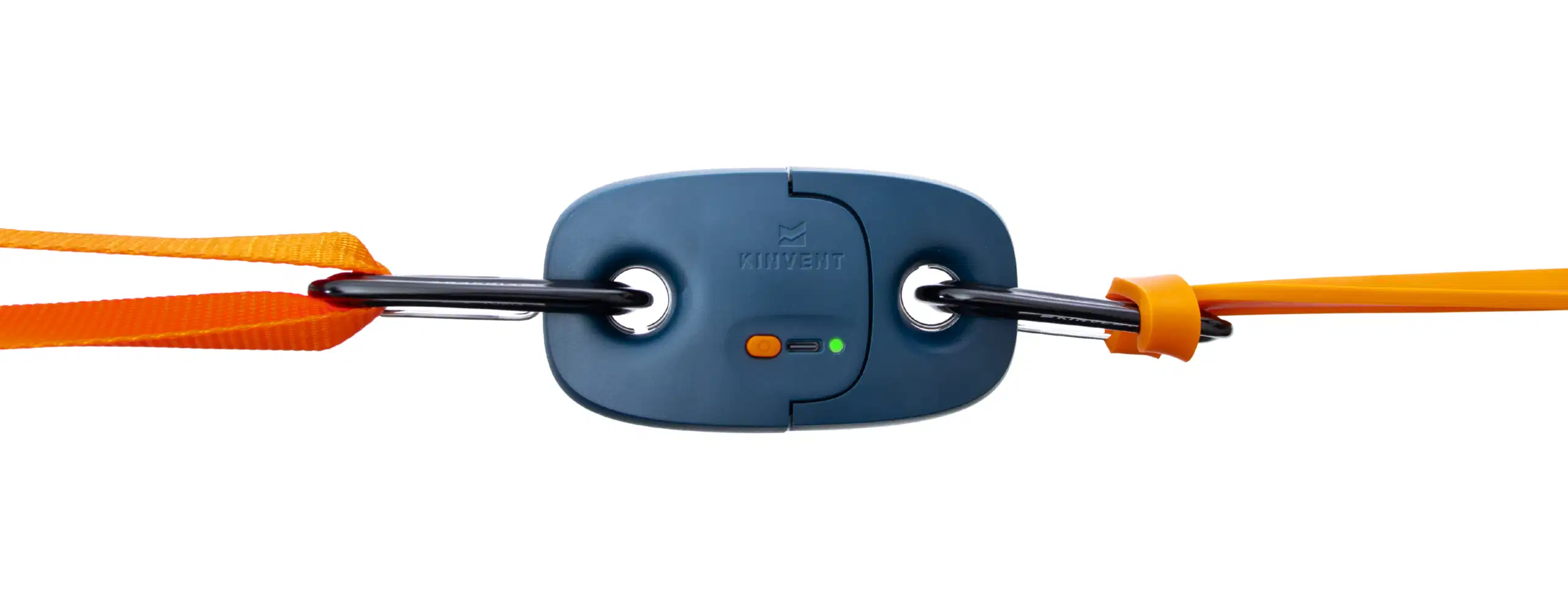
K-Pull is a wireless tensile dynamometer. The sensor sits in line between an anchor point and a strap, handle or band, and whatever the athlete pulls against it registers as tensile force. Kinvent build it around high-precision sensors that record isometric and dynamic force production, and the reading lands in the Kinvent app as it happens.
Loading through an anchor keeps the tester out of the load path. Nobody has to brace the device by hand, so the ceiling on the number belongs to the athlete rather than to whoever is holding the sensor. That is why traction is the route to the hip, thigh and trunk muscles that out-produce a handheld pad, and why Kinvent list the isometric mid-thigh pull and the Nordic hamstring test among the setups this unit was built for.

The Technology
A pulled measurement is bounded by the anchor and the athlete. These are the four capabilities Kinvent publish for the sensor, and what each one changes about a testing session.
What It Records
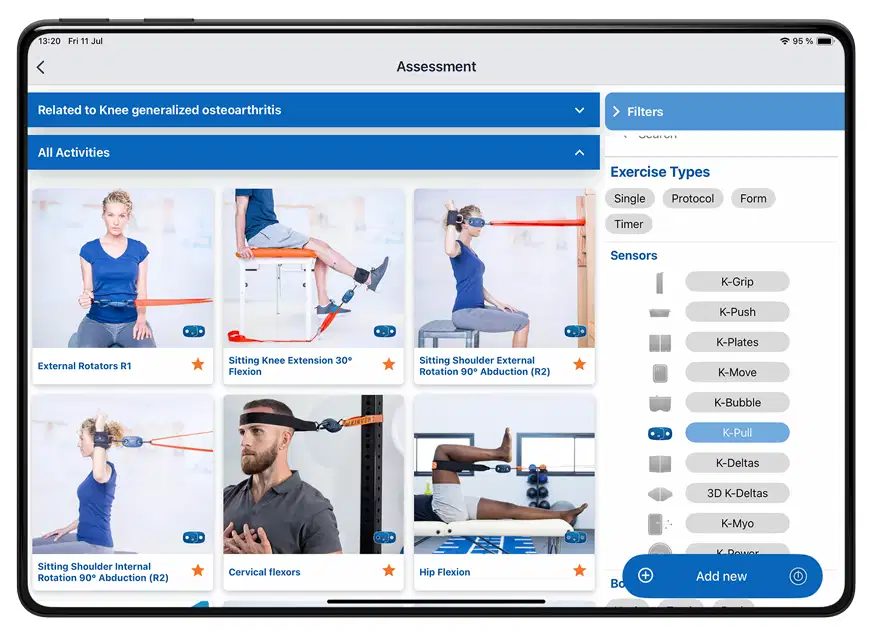
Each attempt is captured in the Kinvent app, which Kinvent describe as objective measurement, real-time feedback and progress tracking.
Closer Look

The sensor goes in series between a fixed point and whatever the athlete holds or braces against, and it reads the tension in that line. Because the load path runs anchor to athlete, the person running the test never becomes the limiting factor, and two staff members working the same protocol are running the same test.

Kinvent name three families of test: the isometric mid-thigh pull, the Nordic hamstring test and resisted strength exercises. The first two produce a peak from a maximal effort. The third is where dynamic force recording earns its place, because the athlete is moving under load rather than holding a position.

Kinvent show the sensor run from an ankle strap to an elastic resistance band anchored on a wall ladder, with the athlete prone on a treatment table for a leg curl assessment. That is the whole idea in one picture: the hardware between the athlete and the anchor decides which joint you are testing, and the sensor reads the line regardless.

Every Kinvent dynamometer talks to the same app, and Kinvent describe what it gives you as objective measurement, real-time feedback and progress tracking. Feedback that arrives while the athlete is still pulling is the part that changes a session, because a tester can tell a clean build from a jerked one before the attempt is banked.
Where It Gets Used
Four working contexts and two named tests, taken from Kinvent's own list for this sensor.
The Kinvent Lineup
Choose by the direction the force travels and the muscle groups you test most. All three report into the same Kinvent app.


Full Spec Sheet
Trusted & Certified
These are the certifications and registrations Kinvent publish for their platform and their quality and information security systems. They cover the company and its medical device and data handling, not a performance claim about this sensor.
Who Uses Kinvent
Kinvent name the following among the organizations working with their sensors. The list is theirs, published on their own product pages.
Questions
placeholder